You want to make a living from your music. So why is no one hearing it?
I've generated nearly a million dollars with guitars I used to send out for free. Here's how I built my distribution.

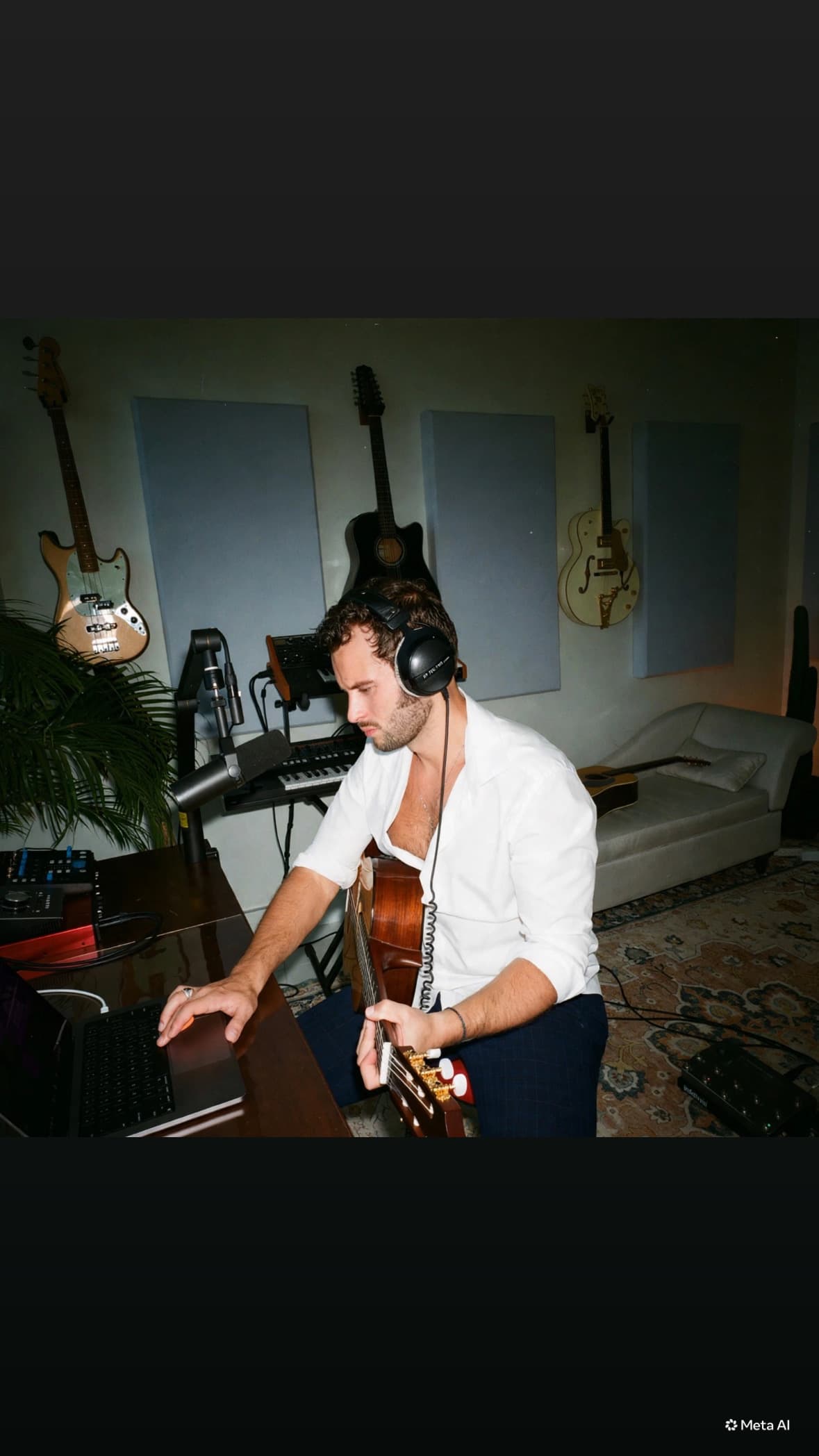
You want to make a living from your music.
You spend hours composing, recording and refining your work. But how many people have actually heard it this week? How many conversations have you started with artists or producers?
Perhaps you're waiting to finish your next track. To sign with a publisher. To meet a manager who will open the right doors.
I did the opposite.
In 2020, during lockdown, I was in my bedroom in Flohimont, Belgium. I had my guitar, my computer and my ideas.
Around me, people were talking about chaos. On my side, I could start circulating what I was recording. So I began posting my guitars and sending them out myself.
I didn't wait for a contract, permission or someone to open the industry's doors. Even today, I have neither a manager finding opportunities for me nor a publisher distributing my work on my behalf.
Relationships matter. I build them directly with other creators by offering what I know how to do.
I didn't wait for the industry to give me a place. I created my own.
And I still let people hear my guitars for free today.
Letting people discover your music for free isn't the same as giving away your work.
One of the first selections I sent to a producer included Sad Crab. We had met in Miami, on the rooftop of the building where I was staying. There was a pool and a view over the city. This environment was new to me, and I was impressed.
We had exchanged numbers so we could start working together. I sent him my guitars. This one caught his attention, and he passed it on to the artist, who wrote to it and recorded a demo in a hotel room.
Then that demo came back to me. My guitar, with his voice.
That guitar became the starting point of Ferxxo 100 by Feid, released in 2022.
After I received that demo, we started discussing my compensation. They asked what I usually charged, and I gave them a price range. The demo confirmed the musical interest; the terms still had to be agreed.
If you put that entire process in the box marked “free,” you miss the decisions it contains: letting someone hear an idea, trying something together, then agreeing on what each person contributes.
1. A creation on your computer meets no one
You can keep improving a guitar no one has heard yet. But if your goal is to collaborate, another creator needs to discover what you bring and find room for their own work.
In the previous letter, I talked about finishing your contribution rather than taking on every role. What comes next is taking it out of your session.
When you write that you're a guitarist, the other person knows your instrument. A guitar part lets them hear your attack, where you place the notes, the space after a phrase. They can start imagining a voice or drums.
Before your next send, listen to the passage outside your session, without your explanation alongside it. Find the moment when the idea becomes clear. Is that what you let them hear first?
If you're offering a melody, layers of effects may mask it. If everything around it is already filled in, the other person has to search for a place where their own idea could enter. Moving the start, choosing another take or removing an element may be enough to make your proposal clearer.
Your excerpt is ready when someone can hear what you bring without needing an explanation of everything you did.
Then there's another decision: what are you handing over with that listen?
2. Make your work accessible while choosing the terms
Hearing a guitar, receiving files to work with and requesting a new part for a song are different stages. Confusing them can lead you to accept extra work when you only meant to introduce your music.
A performance may be enough to present your playing. To try a voice over an existing melody, the person needs something suited to that test. To change the harmony of a verse, you need to discuss the new contribution being requested.
Before sending, finish this sentence: “I'm sharing this excerpt so this person can…”
Hear my playing. Choose between 2 directions. Try a voice. Tell me whether this melody fits the project.
The answer helps you choose useful material. A listening link doesn't commit you to recording 3 new versions for free as soon as someone replies.
That's where I place my independence: offering my music directly and deciding with the other person what we're going to do. I also want my name to remain attached to what I created.
As the project moves forward, you need to clarify what will be used, each person's contribution and the terms of the collaboration. A simple first exchange isn't a reason to leave those questions to assumptions.
You make the meeting easier. You keep the ability to choose what comes next.
3. Move the listen toward a concrete project
Someone likes your music. You thank them. Then both of you wait.
The compliment doesn't tell you where your guitar could go yet. With Sad Crab, the returning demo gave me information a compliment couldn't: I could hear a voice over my guitar. There was a musical direction from which to continue.
You can look for that information before receiving a song. “What do you imagine creating with this melody?” opens a different conversation from “Do you like it?”
Suppose a producer likes your playing but finds the guitar too busy for their verse. You can ask for the passage, listen to the space the voice takes and understand what they want to keep. Then you'll know whether you're discussing using an existing part, adapting it or creating a new one.
Your commercial proposal becomes understandable: the planned work, the files delivered, the price and the terms to agree on respond to an identified musical need.
And if there's no project right now, you learn that too. You can keep the relationship without starting an imaginary commission or sending your whole catalogue to get a different answer.
A concrete next step is described by what each person will do: try a passage, clarify a part, return to an identified song. The enthusiasm of the last message isn't enough to define it.
Prepare your next send
The guitar Senorita, available here on Water, can be a starting point. What do you hear in it? A voice, drums, a way to move the song forward? Name that idea in 1 sentence precise enough for another creator to understand.
Then choose one of your creations and the passage that represents your contribution.
Identify 5 artists, producers or songwriters who are relevant to that creation. Listen to their recent work. For each person, note why you're thinking of them: a place for your playing, a melodic direction they're exploring, a project they've told you about. If your only reason is that they're famous, keep looking.
For each person, prepare 1 suitable excerpt or listening format, 1 sentence explaining why you're proposing the idea to them and 1 musical question. For example, if they've told you about a project: “Do you imagine this guitar going in that direction, or are you looking for something else for this song?”
Decide what you'll look for in the answer: a passage to try, a need to clarify, a part to adapt. If new work is requested, define the contribution and its terms together before starting.
You finish with 1 chosen creation, 5 relevant recipients, your sends prepared and a next action to look for in each exchange.
After sending, distinguish what actually happened: a reply, a collaboration idea, a specific request, an accepted proposal. A listen isn't an order yet. But it can help you understand what work someone wants to do with you.
Your distribution starts there: when your creations reach people with whom you can discuss what they could become.
The last time someone liked your music, what happened next?
GRAUX
Comments